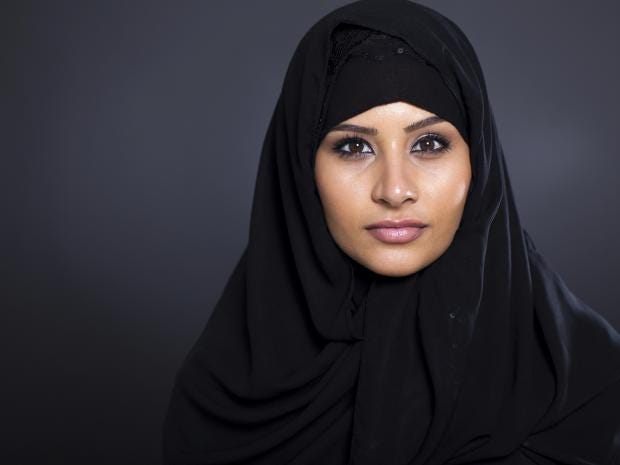
Police Scotland approves hijab as official uniform to boost number of Muslim women joining force

hijab-stock-photo.jpg


Scotland: Police Scotland has announced that the hijab will become part of its official uniform as it aims to create a more diverse force.
The force said they hope the move will “encourage women from Muslim communities, who may previously not have seen policing as a career option, to reconsider”.
In the past, Muslim police officers in Scotland were allowed to wear the hijab, but only once it was approved by senior staff members.
The Metropolitan Police introduced the hijab as an optional part of the force’s official uniform in 2001 as part of a similar drive to recruit a more diverse mix of officers.
In a statement, chief constable Phil Gormley said: “I am delighted to make this announcement and welcome the support from both the Muslim community, and the wider community, as well as police officers and staff. 
“Like many other employers, especially in the public sector, we are working towards ensuring our service is representative of the communities we serve. I hope that this addition to our uniform options will contribute to making our staff mix more diverse and adds to the life skills, experiences and personal qualities that our officers and staff bring to policing the communities of Scotland.”The announcement was welcomed by the Scottish Police Muslim Association (SPMA), a group that aims to build links between Muslim communities in Scotland and the police.
Fahad Bashir, chair of the SPMA said: “This is a positive step in the right direction, and I am delighted that Police Scotland is taking productive steps in order to ensure that our organisation is seen to be inclusive and represents the diverse communities that we serve across Scotland.  
“No doubt this will encourage more women from Muslim and minority ethnic backgrounds to join Police Scotland.”Police Scotland’s diversity drive follows statistics from the Scottish Police Authority released earlier this year which showed just 127, (2.6 per cent) of the 4,809 applications to join the force were from people with ethnic backgrounds. 
The report said: “If the black and minority ethnic groups (BME) national average of 4 per cent is to be met within the organisation, an additional 650 BME recruits are required across all areas of the business.

Source :independent.co.uk

Comments

Popular posts from this blog

7 Unknown Facts About Hajr Al Aswad Every Muslim Must Know.

The Hajr-e-Aswad also known as The Black Stone is set in the eastern corner of the Holy Kaaba. The Tawaf is started and ended by facing this sacred black stone. Over the years, throughout history, numerous people which included the Prophets of Allah (Peace be upon them) and the Holy Prophet Mohammad (Peace be upon him), the Sahaba (may Allah be pleased with them) and other pious Muslim personalities have performed Hajj and Umrah around the Holy Kaaba and have also placed their blessed lips on the Holy Stone. Today we are going to present some lesser-known facts about Hajr-e-Aswad.[irp] 1-The Hajr-e-Aswad also known as The Black Stone was brought down from heaven (Jannah) and was presented to Ibrahim (peace be upon him) so that he could place it in the corner of the Kaaba. Sunan an-Nasa'i 2935 2-The Hajr-e-Aswad was reportedly stolen from the Holy Kaaba during 930 CE by the Qarmatian warriors. These warriors sacked Makkah while desecrating the Well of ZamZam with corpses ...

London mosque first to accepts Bitcoin for Zakat

LONDON: The Shacklewell Lane Mosque also known as Masjid Ramadan in Dalston becomes the first mosque in the UK to take Cryptocurrencies for Zakat and Sadaqah donations this Ramadan. Zakat is one of the pillars of of Islam, which is a commandment to all eligible Muslims to donate at least 2.5% of their wealth to charity. Religious advisers declared that Bitcoin is acceptable in the eyes of Allah, if it is “transacted in a lawful manner”. Muslims can use two different cryptocurrencies-Bitcoin and Ethereum for their Ramadan donations, known as zakat, or sadaqah. “Any money or currency is neither halal – permissible – nor haram – impermissible. Guidance is about the value which it represents. If money is transacted in a lawful manner then it is halal,” Zayd al Khair, a religious adviser at the mosque, told ‘The Daily Telegraph’. Erkin Guney, the Chairman of the Board of Trustees at Masjid Ramadan, Zayd al Khair, an Islamic advisor at the mosque, and Gurmit Singh, found...

Bani Saad Village, Taif and its relation with Rasulallah ﷺ wet Nurse

The SCTH or the Saudi Commission for Tourism and National Heritage has stated that a site located in the Bani Saad Village in Taif has nothing to with the wet nurse of the Holy Prophet Muhammad (peace be upon him), Halima Al Saadiya. It had been previously thought that the village is located around 85 km south of the city of Taif had been named after Halima Bint Abi Dhuayb Abdullah Bin Al Harity, who is well known in Islamic History as Halima Al Saadiya (translating to Halima the Lucky), who was thought to have lived there around 1500 years ago.[irp] The advisor to the SCTA President Prince Sultan Bin Salman, Dr. Saad Al Rashid has stated that there is no scientific evidence which can prove that Halima Al Saadiya had ever lived in the Bani Saad village. He stated that a team from the project of taking care of the important Islamic historical sites had visited the village outside of Taif, upon the directives of Prince Sultan after some press reports had emerged about the presen...